Collingwood Notables Database
Frederick Redmond Collier
1885-1964
Opera singer
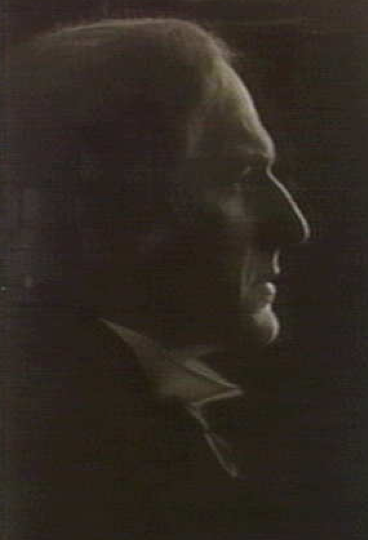
Collier was born in Collingwood and attended St Phillip’s Church in Hoddle Street, where he started singing in the choir at the age of ten. He attended Victoria Park state school and began his working life as a porter with the Victorian Railways at the age of 15.
Hubert Bower Corben
1857-1907
Monumental mason, founder of HB Corben & Sons (mid 1880s to 1958)
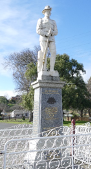
The Corben family came from Worth Matravers, Dorset, U.K. where they were stonemasons, a trade that they continued with great success in Melbourne after their arrival in the 1850s. Hubert, born in 1857, established his own monumental mason business in Smith Street Clifton Hill in 1880. HB Corben & Sons became a respected and long-standing business that was an integral part of the Clifton Hill community and also became well-known for war memorials across Victoria.
Sydney Alfred Coventry
1899-1976
Australian Rules footballer, coach and administrator;
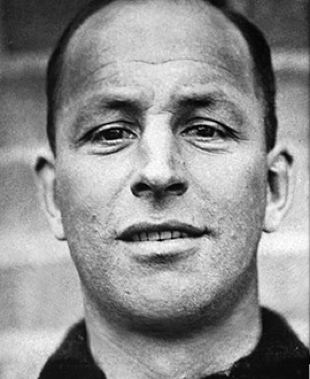
Collingwood historian Michael Roberts speaks for most Collingwood football supporters and the local community when he describes Syd Coventry as truly one of the club’s most revered figures. As a footballer, captain, coach and Club president he was outstanding.
Gordon Richard James ('Nuts') Coventry
1901-1968
Australian Rules footballer, columnist, sports writer, maintenance worker
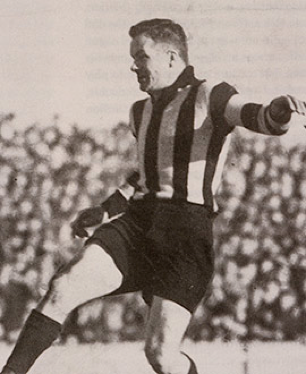
One of the greatest goal kickers in League football, Gordon Coventry held the record of most career goals – an incredible 1,299 – for six decades. The Coventry brothers, Gordon and Syd, were ‘brothers-in-arms’ as they played major roles in Collingwood’s most successful era. Although the brothers were born outside the suburb they are seen as Collingwood Football Club icons. They came from Diamond Creek but through their football skills and leadership on and off the field they won the hearts of Collingwood people, not just football followers. To Collingwood locals they were always hailed as true sons of Collingwood.
Patrick Coyle
c.1839-1888
Publican, brewer, land sub-divider
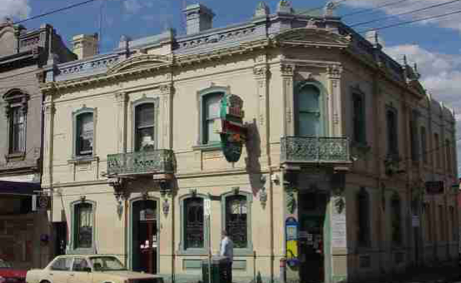
To Patrick Coyle we owe the lasting pleasure of the delightfully-decorated Albion Hotel on the corner of Smith and Perry streets, and the striking group of four two-storey shops which are its neighbours. Coyle was first heard of in Collingwood in 1869 as the resident publican of the Grace Darling Hotel in Smith Street, and later became the owner and publican of the Albion Hotel.
Edward Curr
1798-1850
Early settler, grazier, Member of Parliament
In 1840s Melbourne the stretch of the Yarra in what is now Abbotsford attracted people to build houses on large landholdings in an almost rural environment. A neighbour of John Orr at Abbotsford House, Edward Curr was another early settler on the section of the Yarra just south of Johnston Street. His property, purchased in 1842 from John Hodgson, was called St Helier’s. In comparison to other riverside locales of Abbotsford, the present land use pattern in this area largely perpetuates the expansive garden settings and peaceful qualities of the early nineteenth century. This is because both properties were later acquired by the Convent of the Good Shepherd rather than being extensively subdivided into small building blocks or factory sites.
Johanna Curtain, Mother Mary of Mt Carmel
1835-1888
Nun, third Mother Superior of the Convent of the Good Shepherd
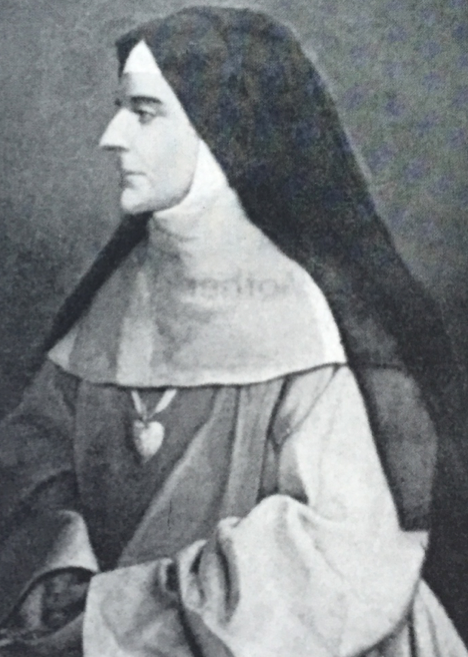
Sister Mary of Mt Carmel Curtain arrived in Melbourne in July 1867 with three other nuns to join the community of the Convent of the Good Shepherd at Abbotsford which had been set up in 1863 under the leadership of Mother Mary of St Joseph Doyle. Sister Mary of Mt Carmel became the third Prioress or Mother Superior in 1873 and was to remain in that position until her death in 1888.
William Thomas Dartnell
1885-1915
Soldier, Victoria Cross recipient
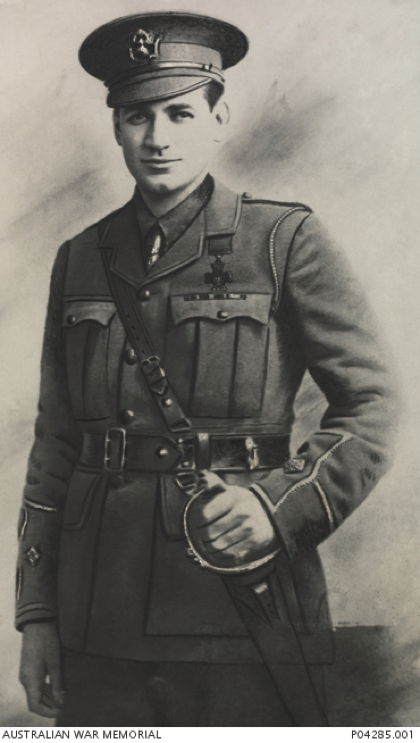
Dartnell was one of two Collingwood boys who were awarded the Victoria Cross, but unlike William Ruthven, Dartnell spent only his early years in Collingwood, as his parents later moved to Fitzroy. Also unlike Ruthven, he did not survive his act of bravery.
Mildred Demaine
1860-1941
Memoir writer
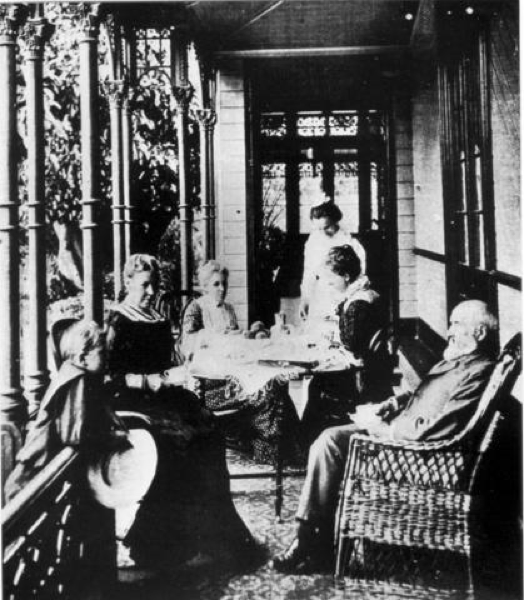
Mildred Snowden was the daughter of solicitor Arthur Snowden (later Sir Arthur) and was born at the family home in St Helier’s Street Abbotsford. In later life she wrote reminiscences of her childhood and youth, giving us a rare insight into domestic and social life of the times.
Harriet Elphinstone Dick
1852 - 1902
Swimmer, swimming teacher, gymnast
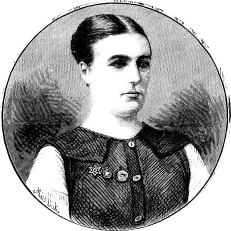
Harriet Elphinstone Dick (Rowell) was a champion swimmer, a gymnast and gymnasium proprietor who made quite a splash after her arrival in Melbourne. In a period when corsets and other restrictive clothing were de rigueur for middle class women, and physical activity was often deemed unladylike or even unhealthy, Harriet’s swimming exploits, her establishment of the Ladies Gymnasium in 1879, and her advocacy of sensible dress, made her an object of considerable attention. At the peak of her career Table Talk waxed lyrical:
Her pupils can be recognised anywhere by their splendid figures, fine carriage, and graceful movements … strength is nothing without grace, and grace is a poor thing without strength.
John Dight
1808-1867
Early settler, flour miller
Dight has bequeathed his name to Dight’s Falls where he harnessed the flow of the Yarra to operate the first water-driven flour mill in Melbourne. In 1840s Melbourne the stretch of the Yarra in what is now Abbotsford attracted people to build houses on large landholdings in an almost rural environment, but Dight was the first to combine home and industry.
Charles Jardine Don
1820-1866
Stonemason, councillor, Member of Parliament
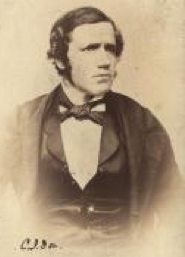
At his death, The Age wrote that Don ‘had opened for his whole class the portals of the senate’. He was a pioneer labour parliamentarian as member for Collingwood in the Legislative Assembly of Victoria. Don claimed to be the first working tradesman to sit in a parliament of the British Empire.
Bridget Doyle, Mother Mary of St Joseph
1835-1869
Nun, founder of the Convent of the Good Shepherd Abbotsford, first Mother Superior
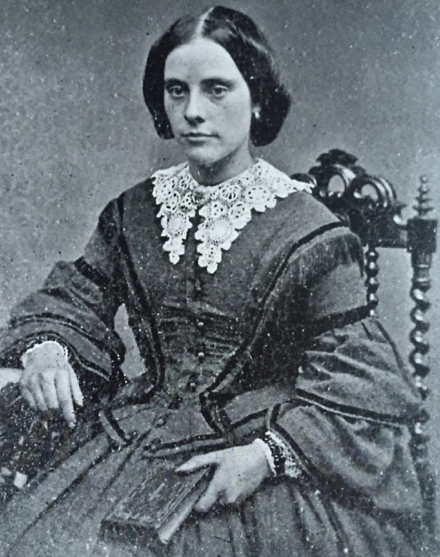
Bridget Doyle, born in Roscrea (County Tipperary) Ireland in 1835, grew up in Rahan (County Cork) during the Famine Years 1847-50. In the late 1850s she entered the Order of the Good Shepherd in Angers, France. She led a party of four nuns to Melbourne in June 1863 at the invitation of Bishop James Goold, who believed that ‘A penitentiary for Females and a juvenile reformatory for girls are much needed.' The little band of sisters immediately set about looking for a suitable house in which to establish their Convent of the Good Shepherd.
Anne Drake
1833-1911
Teacher
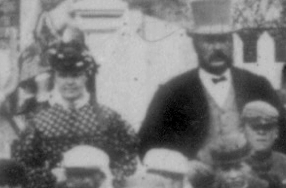
Mrs Anne Drake was a well-known teacher and resident of Abbotsford. She spent twenty years as the head mistress of Abbotsford School, established in 1855 under the Denominational system, followed by twelve years at Cambridge Street State School.
Joshua Dyason
c. 1815 - 1888
Cordial manufacturer
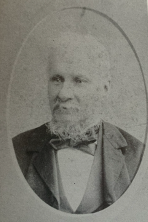
Joshua Dyason established a cordial business which became very well-known in Collingwood and throughout Melbourne. The business, eventually known as Dyason and Son, and later Dyason, Son and Co., was started by Joshua Dyason in a small way in 1869, possibly in Carlton, although in the 1870s he had a business address in Eastern Arcade in the city.
John Prescott Dyason
1855 - 1936
Cordial and sauce manufacturer, councillor
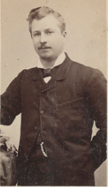
John Dyason was a manufacturer who became well-known in the Collingwood district for his firm’s cordials, preserves, sauces and jams. He has left a delightful architectural legacy in the remaining Dyason and Son’s factory, at 44 Oxford Street, Collingwood. John was the tenth child of Joshua Dyason, the founder of the firm. His middle name, Prescott, was supposedly bestowed on the boy to reflect his father’s pride in securing the sole colonial agency for Prescott’s Parramatta Lime Juice. This famous West Indian lime juice was not only a refreshing beverage but was also supposed to prevent scurvy.
Joel Eade
1823-1911
Builder, architect, councillor, magistrate

Eade was prominent in various aspects of Collingwood life but is now probably best remembered for his involvement with the Collingwood School of Design. Pupils included the inventor Louis Brennan, who showed some of his work at the first exhibition, and the artist, Tom Roberts, who recalled the encouragement of 'higher aspirations in lads who might otherwise have dragged on as common plodders’.
Caroline (Carrie) Earle
1855-1938
Charity worker
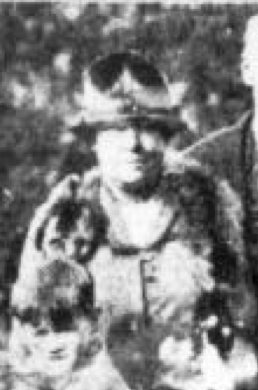
The name ‘Mrs W J Earle’ made a very frequent appearance in newspaper articles from the 1890s to the 1930s. Caroline Earle was a tireless committee worker for several charities, including the Children’s Hospital, the Women’s Hospital, and the Collingwood Crèche. The last had been established in 1886 by the Reverend Dr Strong of the Australian Church and his wife Janet. Caroline became honorary treasurer and later president of the Crèche committee, while living for over forty years at Rathgael on the corner of Hoddle Street and Noone Street in Clifton Hill.
Aileen Emma Estcourt
1897-1960
Pianist, music teacher
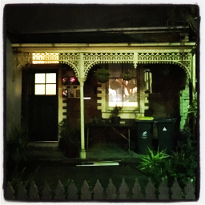
Aileen Escourt was a resident of Queens Parade Clifton Hill for over fifty years and taught piano for much of that time. Her home and place of work was Viola, now number 193. In this street the majority of buildings are shops with an upstairs dwelling, built on the front property line, with a verandah over the footpath originally. However Aileen’s house, and the neighbouring one at 189, date from an earlier period, being residential and possessing front gardens. Later the owner built a shop to the side of Viola and a smaller one partly in front of it, which nowadays, combined into one shop, partly obscure the view of the cottage.
Thomas Archibald Eunson
1872 -1958
Minister
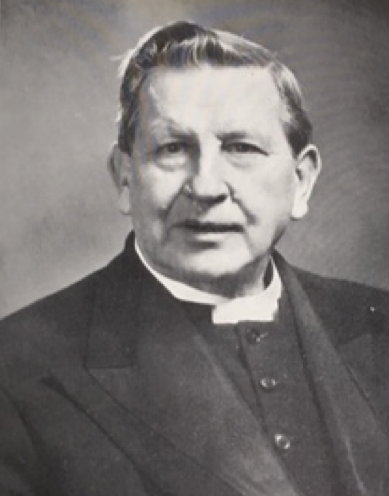
Reverend Eunson was the pastor of the Sackville Street Baptist Tabernacle from around 1908 to 1950, an extraordinary ministry of 42 years. He became well-known for his social work, helping the many poor of the Collingwood district. On the occasion of the commencement of the 35th year of his ministry the secretary of the Baptist Union of Victoria (Rev. G. P. Rees) paid tribute to Eunson, stating that his social service work had made him so widely known and beloved of the people of the district that he might well be known as ‘the Bishop of Collingwood.’
Jesse Fairchild
1815 - 1901
Fellmonger, early settler, subdivider
Jesse Fairchild lived and worked by the banks of the Yarra in Abbotsford. He arrived in Port Phillip in January 1842. Having been a fellmonger in St James Deeping in Lincolnshire, he first acquired a sheep station. However, falling prices sent him to employment at a fellmongers in Melbourne, where he eventually acquired his own business. As the town expanded, such industries could no longer be accommodated in the central area, and Fairchild moved operations to Abbotsford.
Mary Fairchild
c. 1824 - 1907
Convict, colonist, businesswoman

Mary Fairchild (née Fennelly) is an example of an Irish-born convict transported in her teens to Tasmania (then called Van Diemen’s Land), who went on to make a success of her life in Victoria as the respected partner of businessman Jesse Fairchild. The couple lived in a large Yarra-side house in Abbotsford next to Jesse’s Woolthorpe fellmongering works. The 14-acre property was subdivided in the mid 1880s, but the mansion and its garden survived into the twentieth century.
John Pascoe Fawkner
1792-1869
Early settler, Member of Parliament, magistrate
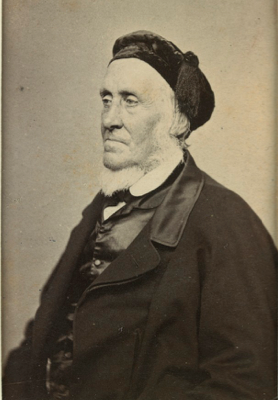
In 1835 Fawkner arrived in Port Philip with a small group of men, and competed with Batman for the title of the ‘founding father’ of Melbourne. Unlike Batman, who died in 1839, Fawkner would live on to be an influence on the developing town and to see it grow into a thriving metropolis. He was very much a self-made man, having travelled to Tasmania with his convict parents at the age of ten, and tried a variety of careers including baker, publican and printer. His energy and involvement in many aspects of the life of Melbourne and Collingwood were legendary. He became a ‘grand old man’ of politics and a Melbourne institution.
William Guard Feild
1847-1905
Cooper, estate agent, councillor, Member of Parliament
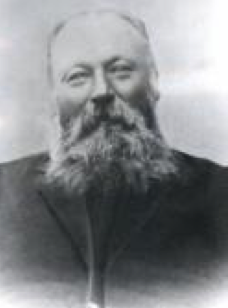
Feild was a Collingwood councillor from 1879 to 1887 and again from 1890 until he resigned in June 1894. The first Australian born Collingwood mayor, he held the position in 1881-82 and was MLA for the seat of Collingwood from 1886 to 1889. He was a cooper by trade, following in his father’s footsteps. Feild Street in Clifton Hill was named in his honour, although nowadays it is misspelt, and his name may be seen on the foundation stone of Collingwood Town Hall.
Robert Fennell
1813-1877
Early settler, shipping agent, farmer
In the 1850s Fennell and his wife Maria, the eldest daughter of Melbourne pioneer John Batman, lived and farmed at Yarra Grange, a riverside property in what is now Abbotsford. While Fennell’s primary business was a shipping agency, at Yarra Grange the couple produced fruit and vegetable crops, and ran dairy cows. Several of their children were born on the property.